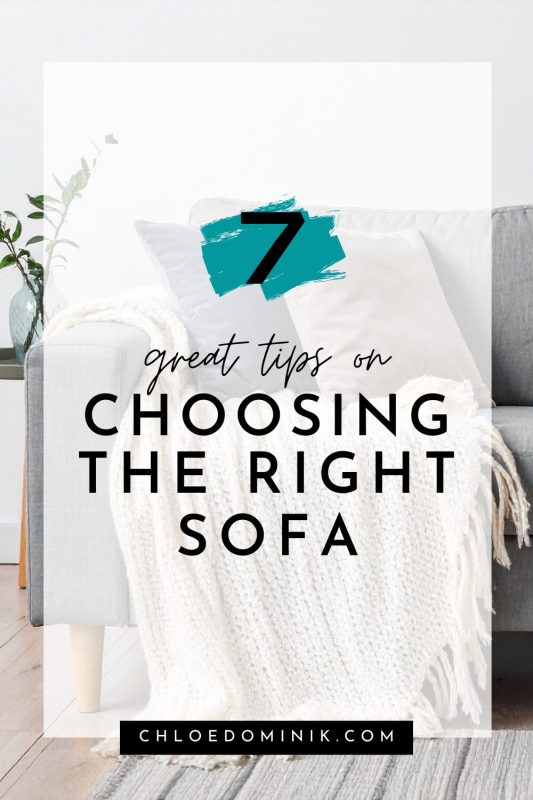
7 Great Tips To Remember When Choosing A Sofa
When it comes to choosing a sofa, it’s not something you want to rush into buying. In the short term, you may have something to sit on, but long-term, it could cost you money and time.
The living room is a big part of where we spend a lot of time relaxing at home, and choosing the right sofa is a big component of that!
The sofa is a big investment piece and something that should last a long time. So it’s definitely worth spending a bit more money to get the best piece for you. Here are some main tips to consider when it comes to choosing and buying a sofa.
Tips for Choosing A Sofa
1. Measure The Space

The first thing to do is to measure the space where your sofa is going. Depending on where your sofa is going, it’s a good idea to leave some room on either side. This will be for traffic flow, and if you want to add a side table or something like that.
Use tape to size up the sofa. You can tape out the size of a standard-sized sofa, and that will give you a good rule of thumb to see if you can go for a larger size.
Take a photo of the mapped sofa size on the floor and note the dimensions. When you’re out shopping, you’ll know what the absolute maximum size is you can go for.
Remember to check and measure the entry ways leading to the room the sofa is going into. As well as the width of your front door, if that’s the way the sofa is coming through. Also, to measure the dimensions of the stairway and the height, if the sofa is going up the stairs or passing through to get into the room.
Sometimes a lot of maneuvering is needed, and the sofa will have to be moved in a few positions to get through the space. Double and triple check everything!
Check if the sofa comes in one piece. If the legs can come off, that will play an important role in deciding what kind of sofa will fit into the space. Modular sofas are a great option if you’re tight on space.
So many people think they have found the perfect sofa, only to find that when it comes to delivery, it doesn’t fit! Even worse if it’s a custom piece!
Draw a quick sketch of your room and write down the measurements for the space. It will save you a lot of time and money!
2. Try Out
Online shopping is how we do a lot of buying nowadays, even with big-ticket furniture items.
But any time you can try the actual sofa out in a showroom, that will be better in the long run. There’s such a big difference between seeing something on a screen or brochure and sitting in it.
The firmness or softness of the cushions is important. As well as the cushion depth, the arm width, and the height at the back of the sofa. If there isn’t a way of trying out the sofa first, make sure there is a good returns or grace period available.
3. Your Preferences
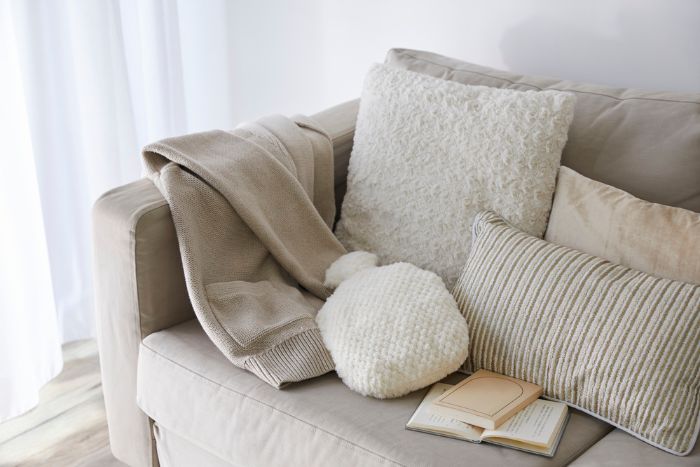
What do you like when sitting on a sofa?
This may sound like a really obvious question. Your first answer will likely be, “comfortable?”
Yes exactly. How so? Full stretch lying down, curled up with your feet under your bum, or just sitting? Do you like to completely sink into the cushion? All of those questions are another reason why you should test out the sofa first if possible.
How the cushions are structured will also be an important factor. Are the cushions fixed to the seat and the back? What are they made out of? A foam and feather cushion is a good option as the foam gives the cushion more structure and the feathers give the cushion its plumpness.
A more formal style sofa might use all foam for its cushions, giving it a firm seat. This may be a better option if you or anyone in the home has back problems.
For a lounging style sofa, feather or foam is good, depending on how soft you’d like the seating to be.
4. The Sofa Fabric
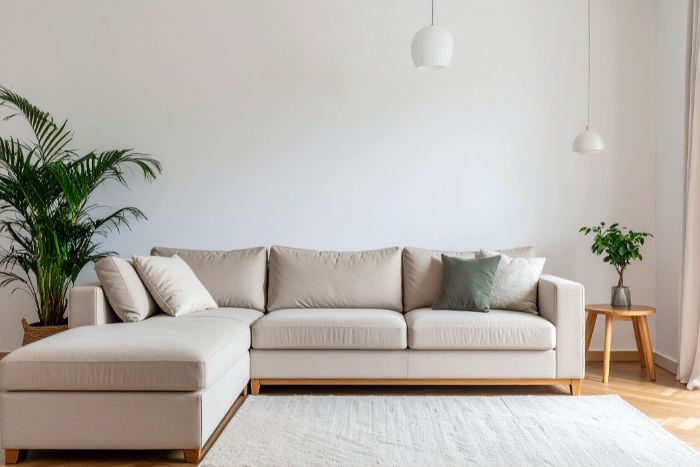
When it comes to choosing the fabric, certain factors will come into play depending on the household.
Do you have pets in the home? Hardwearing synthetic fabrics, such as Perennial fabrics for indoor and outdoor materials, will be the best option.
Also consider a slipcover option or removable cushion covers for dry cleaning and easy washing. Colour and pattern of the fabric are important as the sofa is usually the biggest piece of furniture in the room. Is a neutral colour or a bold pattern the best way to go for you?
Or you can forgo the fabric and opt for leather instead. Leather will naturally change and age with continued use. So this will be a factor in your choosing.
Whichever option you go for, leather or fabric, try to order material swatches. With swatches, you’ll be able to touch and feel them and see what the colour looks like at different times in the day. Don’t forget to look at the swatches in your lighting at evening time, as well as in daylight.
5. The Sofa Structure
The biggest part of getting a good quality sofa that lasts and withstands a good few years is the frame structure. There are lots of cheaper options when it comes to choosing a sofa, but buying an item like this is a long-term investment piece.
So make sure the frame is solid and that it’s well-made. A solid hardwood frame is the best option and will ensure a good quality and long-lasting sofa.
6. What Style Sofa?
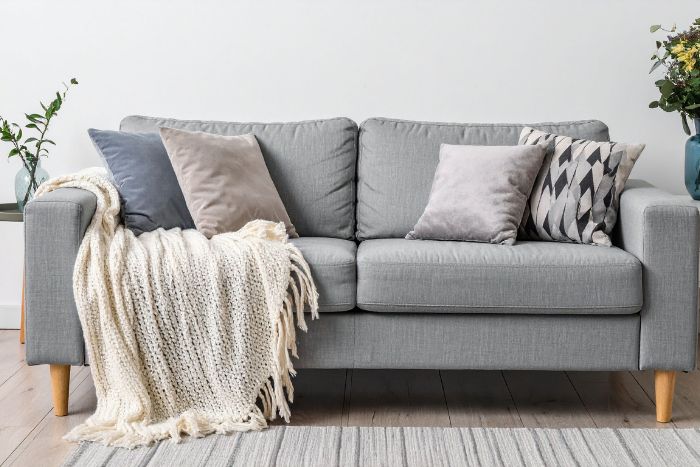
When we see something over and over again, we tend to gravitate towards it. It’s easy to see something ten times on Pinterest and think ok that’s the right furniture piece for me! Even when that might not necessarily be the right style for us, our space.
Again, go back to your preferences and what will work best for you. A fixed back sofa is more formal, but requires less daily maintenance.
The cushion back sofa and scatter back cushions are more of a casual style. If you’re looking for a clean aesthetic, a bench cushion sofa is the best option. This is instead of a two or three-cushion seater.
Modern-style sofas tend to have straight arms or be armless. Traditional-style sofas usually have a curved or rolled arm.
7. Sofa Budget
How much money do you want to spend on a sofa? Price range varies incredibly from $500 and into the thousands and over, depending on size, style, material, and brand. Because seating is the main function of a living room, you want to make sure it’s going to stand up to expectations. If you’re renting short-term, you won’t need to spend as much money on a sofa as you’ll need it for only a couple of years.
However, if you’ve found your forever home, you’ll want a sofa that lasts for years and can cope with the wear and tear of daily life. Allocating a larger portion of your budget makes sense.
Remember when choosing a sofa to pick something you love. A sofa that is suitable for your home and way of life. And that is going to stand the test of time.
Chloe
- 9 Great Elevated Home Styling Tips: To Get The Right Finishing Touch
- Ultimate Bar Cart Styling Guide: What Every Bar Cart Needs
- 40 Cute Christmas Cushions To Get Into The Festive Spirit
- 31 Creative Craft Room Office Ideas
- 10 Great Tips: How To Make A Bed Look Luxurious Styling Guide




Thanks for the tip that the fabric is also important to consider when chopping for a new sofa. One of the things I would like for the seats in my living room is that it wouldn’t be too difficult to take naps on them. As such, it would be important to make sure that the fabric is breathable in order to avoid uncomfortable sweating during hot days.