10 Excellent Tips To Nail The Scandinavian Interior
The Scandinavian interior design style is a popular choice worldwide. Known for its simple, clean yet cozy aesthetic, it’s a style that can work anywhere in the home. This design style gets the balance of simple but cozy and livable just right!
It’s clean but comfortable. A design style that’s suitable for family abodes, apartment living, and anywhere else in between!
What is Scandinavian Interior Style?
The main aspects of creating a Scandinavian interior are using simple materials such as wood, other natural materials, and light colour tones. Bringing in as many natural elements as possible into the space is important, as the Scandinavian interior has a strong biophilic bearing.
This connects us with nature and helps to lift our mood! Essentially, promoting a space that is focused on our well-being. Which is why the Scandinavian design style is so well-loved!
As well as using simple materials, the design of the furniture is clean and uncomplicated. No fussiness or ornate detailing. The Scandinavian style is much more of a practical and functional use for the home.
Using eco-friendly and sustainable pieces whenever possible is a bonus, too. Good quality and purposeful items over quantity.
When you think of a Scandinavian house interior, it’s generally centred around the functionality of the home. It can lean towards a more minimalistic look, but adding decor pieces is still important. Though when it comes to Scandinavian home decor, it tends to be a little more subtle traditionally.
I’m sure most of us are familiar with the Scandinavian look, with the likes of Swedish giant Ikea and Scandi styles all over Pinterest. The other countries that make up Scandinavia are Denmark and Norway, along with Sweden. Here are the top tips for creating a beautiful Scandinavian home design style yourself…
1. Natural Light
One of the key aspects of getting the Scandinavian look is bringing in as much natural light into the home as possible. This makes the space feel light and airy and is a sure way of making the room look bigger.
Of course, unless you’re planning a home remodel, the light from the windows you have is a given. Just use materials that allow as much light as possible. Like sheer curtains that will give privacy and a minimal design style for window treatments.
As far as light fixtures always go for layered lighting rather than one light source, regardless of style. Simple design styles like pendant lights, wall sconces, and lamps of an industrial style suit best. Candles and lanterns can be used for decor and soft lighting for evenings and in the wintertime.
2. Scandinavian Colour Palette
The most popular colour option for most Scandinavian interiors is, of course white. This is because it gets pretty dark in certain regions of Scandinavia. So the lighter the colour, the better for those regions.
White might be the most obvious choice, but it ties in with the minimal and simple way of living. Using white also enhances the natural light in the room. Warm whites are better as the undertone won’t be cold.
Using white for a Scandinavian interior design might be the most popular option, but it’s not the only colour. Muted colours and light pastels are also great colours to use and fit in perfectly with the Scandinavian aesthetic.
Creating calming and relaxed spaces which is a must. Especially when it comes to choosing the bedroom colour.
3. Color Contrast
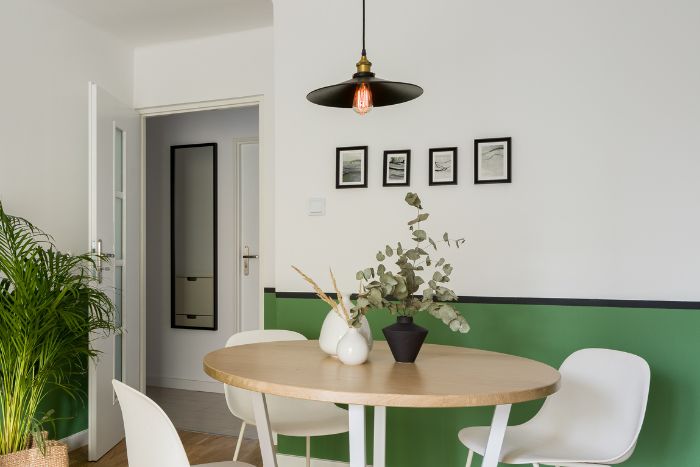
Although using light colours is preferable for the main colours in a Scandinavian space, a contrasting colour makes an impact in the scheme. Black finishes and accents are great for a high colour contrast. But different coloured metal finishes will give a contrast from the surrounding light colours as well.
4. Style Of Furniture
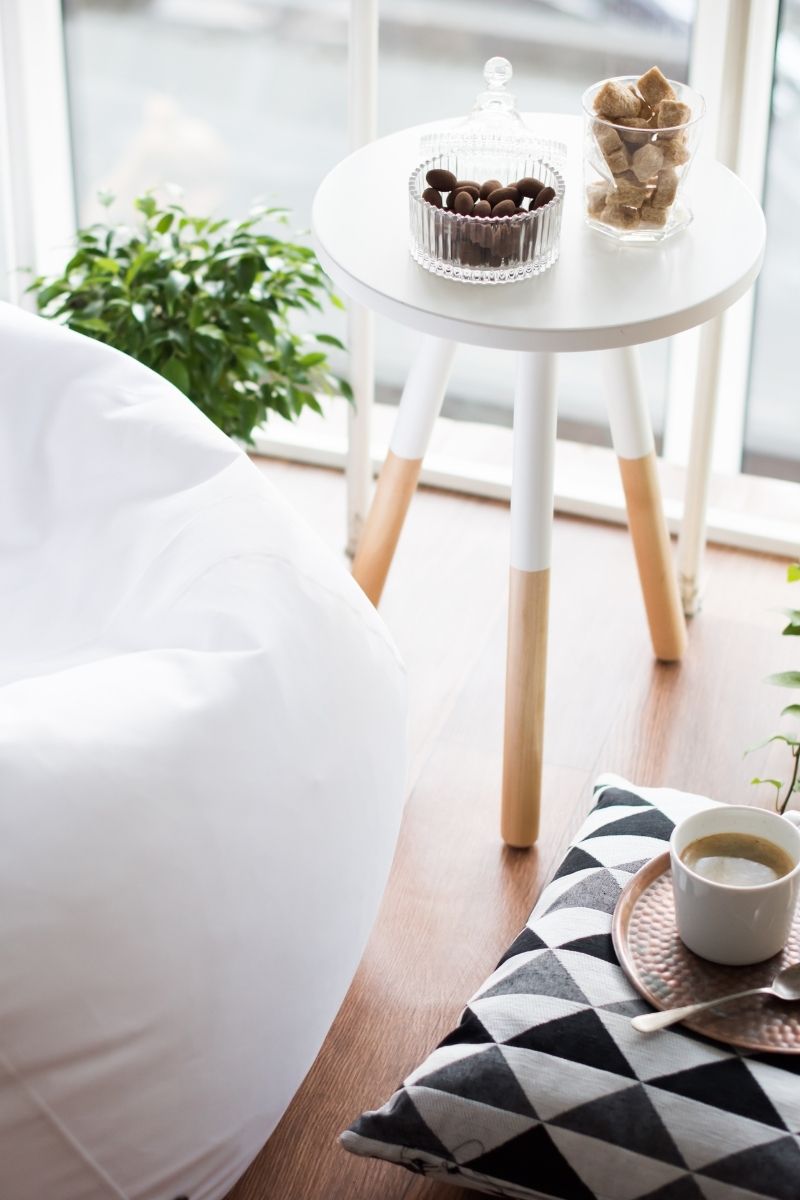
Throughout a Scandinavian scheme, the main theme is simplicity, and this goes for the furniture too. Furniture with rounded edges gives a modern touch, along with tapered legs and simple shapes, lending to the non-fussy element of design.
This kind of furniture design helps to reinforce the space and light that make up a Scandinavian interior.
Over all a modern furniture style is the best look to opt for. Think of the Wishbone chair by Hans Wegner, a firm favourite for a Scandinavian dining room or living room. If you’re thinking of a more modern Scandinavian interior, then you can veer slightly away from the traditional materials and opt for something like a ghost chair instead.
5. Multi-Functional Furniture
Multi-functional furniture will be of great use as well to keep things organized.
Less is more in Scandinavian design, so the pieces you do have have to make sense and be practical in more than one way. Maximizing the space gives more flexibility and space, and getting creative is essential when it comes to designing smaller spaces.
6. Clutter Free
With the constant idea of simplicity linked to Scandinavian design, clutter is a no-no. Visual clutter will take away from the idea that less is more, which centres around this interior style. This doesn’t mean you have to go the minimalist route, but it does mean good organization!
Well-being is one of the central focuses of the Scandinavian home. And decluttering is one of the best ways of creating a relaxed and enjoyable environment for ourselves!
7. Wood Elements
Wooden furniture and decor pieces are a must for any Scandinavian-inspired room. Natural and light woods are the hallmark of a Scandinavian room.
You can opt for light wood materials such as pine, ash, and beech, and even white washed oaks for the floor for a more modern look. If you are thinking about ever painting wooden floors, white is the only option for a Scandinavian interior!
The light wood elements are another piece of the design that promotes light and space in the home. You can use some wicker or rattan pieces to change things up a bit. This way it still brings in the wood element but gives it a break from the solid woods.
8. Adding Textures
This is where the Danish philosophy of Hygge comes in.
With all the clean lines, simple finishes, and muted tones, the room needs some warmth. That’s where the texture comes from, all the soft furnishings.
Lots of cushions with beautiful, cozy, and organic soft furnishings. The soft furnishings help to break up the straight lines and give another opportunity to add some colour in an otherwise neutral space.
Adding in the soft elements will make the space inviting, like an area rug to add some interest and coziness to the wood floors. Leathers, wools, sheepskins and knits are some of the typical materials that you find in a Scandinavian interior. In the summer swap in for the lighter fabrics such as linens and cottons.
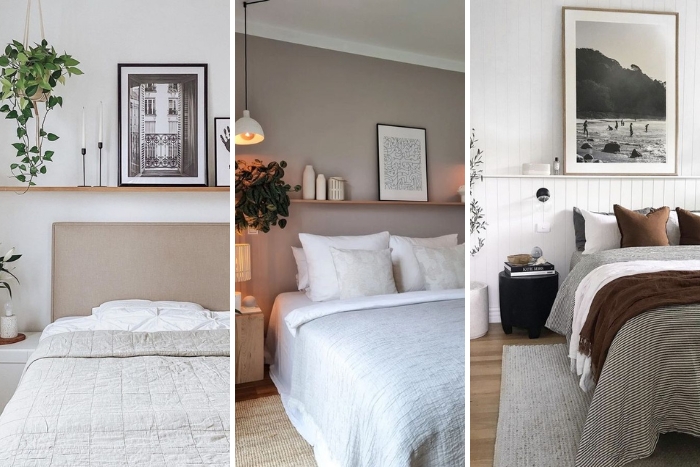
For a Scandinavian bedroom, layering throws and cushions is a must.
9. Greenery
Biophilic design plays a big role in a Scandinavian interior, so bringing in plants to the space will add life, colour, and some more interest to the space. Foraging branches are also a nice decorating idea for a delicate and sculptural design.
10. Scandinavian Decor
Decor is about adding your personality to the room. If the Scandi style is something you already love, then the decor will surely suit your taste as well. With this trend, there’s no need to be afraid of sparse walls.
Think of a carefully curated gallery wall or one large print or artwork as a focal point for the wall. Not too much and not too little. The Swedish term “lagom” translates as “just right” or “in between.”
Artwork and prints themselves are usually in a simple style, down to the frames. Some popular choices are black and white prints and photography for the contrast. Line work drawings, abstract or subdued and muted paintings.
Sometimes, traditional pieces like oil paintings are used, maybe an occasional piece in a gold frame. As long as they’re intentionally placed and something you love!
The Scandinavian interior is an easy style to adapt to. So easy that it’s made its way into different twists on the design style. Such as rustic Scandinavian, boho Scandinavian, modern Scandinavian, and minimalistic Scandinavian trends.
It’s even been fused with the Japanese look to create the Japandi trend. There are a few avenues that you can branch out to with the Scandinavian look at the core of the design!
I think it proves why the Scandinavian interior is a classic style and why it’s so hugely loved. Hope these tips and ideas helped!
Chloe
- 22 Indulgent Hot Chocolate Bar Ideas To Enjoy On The Cold Days
- 9 Great Elevated Home Styling Tips: To Get The Right Finishing Touch
- Ultimate Bar Cart Styling Guide: What Every Bar Cart Needs
- 40 Cute Christmas Cushions To Get Into The Festive Spirit
- 31 Creative Craft Room Office Ideas